Adding self-improvement to a full schedule feels impossible for most. Digital apps try to solve that by supplying flexible plans built around individual time and objectives.
Results vary a lot though. Having endless lessons or trackers doesn’t guarantee success. The real factor is how naturally the app meshes with daily habits, learning style, and specific targets.
Finding time for self-improvement is hard. The right app makes it easier by aligning with your life. We’ll cover what makes an app useful, how to pick one, and review five leading platforms.
What Makes an Everyday Self-Improvement App Useful
Good apps don’t just give you content. They fit your actual day and help you make changes that last. Check for these basics:
Look for these things before downloading anything:
- Personalization that actually adjusts — goals you set, speed you move at, stuff that feels made for you.
- Short, doable lessons with clear next steps, interactive bits, nothing vague.
- Content coming from people who know their field, backed by solid research.
- Tools that keep you coming back: progress logs, gentle nudges, maybe even a small community vibe.
- Zero pressure on time — five minutes works, an hour works, it bends to whatever you’ve got.
How to Choose the Right App for Your Routine
When choosing an app, focus on three things: your daily time, your best way to learn, and your precise goal.
1. Assess Your Available Time
Match the app to your available time. For 10-15 minutes daily, pick an app focused on micro-lessons. With 20-30 minutes, opt for an app that provides a daily task. If your time comes in longer, infrequent blocks, select an app with a full on-demand library you can access anytime.
2. Identify Your Learning Style
Forget features for a second. How do you actually learn? Get that straight first, then find an app that matches.
- Visual or hands-on? Skip the long articles. You need video libraries, clear diagrams, or tools where you can build things yourself. That’s the ticket.
- Learn by listening? Your app should be all about audio. High-quality lessons, podcast-style deep dives, solid summaries you can hear.
- Gotta stay active? Look for constant interaction. Built-in exercises, no-fuss quizzes, and clear progress trackers to keep you hooked.
- A reader? Then lean into text. Your ideal app is a curated library of articles, smart summaries, and thought-provoking prompts.
3. Define Your Specific Goal
Be clear about your purpose. To form a habit, select an app with tracking features. To gain a skill, look for project-based learning. For general information, a simple content library is enough. Match this goal with your available time and preferred learning style to find a practical app.
Top 5 Self-Improvement Platforms Compared
Here’s a look at five top self-improvement apps—each works differently. We’ll compare their methods, key features, and who they’re best for.
1. RiseGuide
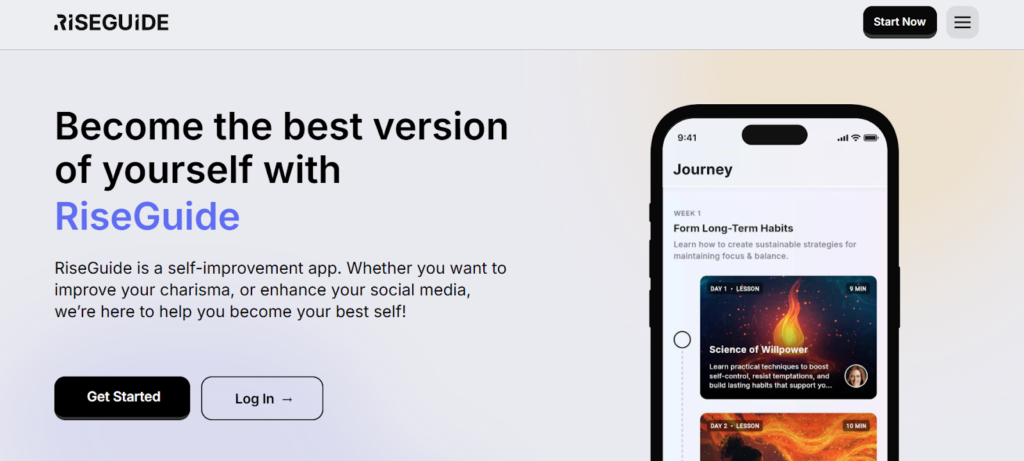
RiseGuide is an app built around micro-learning for personal growth. Each day it offers a single brief lesson covering practical skills: communication, charisma and presence, audience development, intellectual performance, and memory techniques.
The lessons incorporate findings from neuroscience experts, credible authors, and proven high achievers, along with quick interactive components to reinforce learning through action.
By maintaining a daily routine, users can develop reliable habits and achieve meaningful, long-term self-development outcomes.
Key Features
Inside the app, you get:
- Daily 5–10 minute micro-lessons on communication, confidence, and core skills.
- SEEK Expert Search for instant, research-backed answers.
- Methods from neuroscientists and world-class performers.
- Interactive tools: templates, workbooks, quizzes, trackers.
- On-demand library of expert lessons.
- Active community: 500k+ users, 30k+ daily learners, 800k+ collective hours.
2. Mindvalley
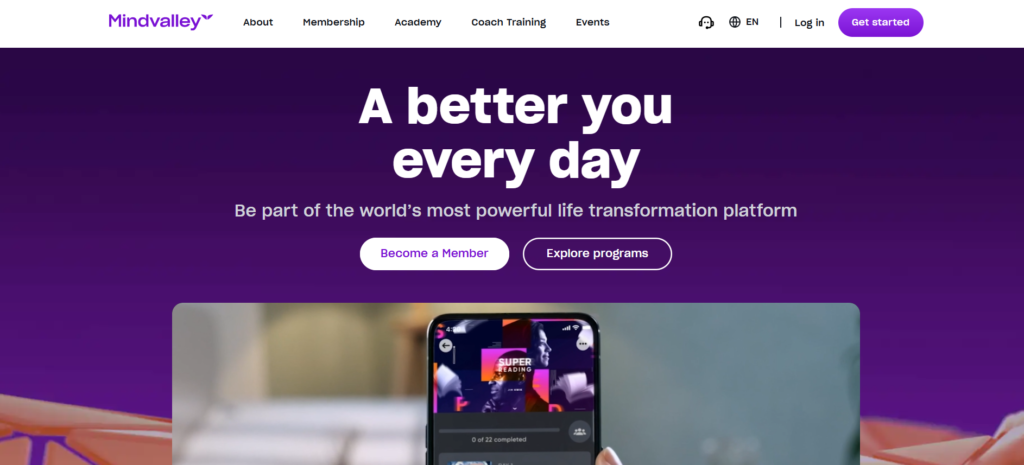
It’s Mindvalley—an online platform aimed at self-improvement. Offers Quests as the main structured programs, daily short content, guided meditations, plus community interaction.
Hits mindset, health, relationships, entrepreneurship, spirituality. Mixes expert-led material with motivation tricks and group learning. Goal is lasting habits and better overall life, not just random knowledge.
Key Features
Mindvalley has daily lessons called Quests. They keep them under 20 minutes so you can do them every day without much hassle.
Community is a big part—users from different countries connect, share progress, help each other out. Lessons come from known authors, speakers, and coaches.
They also offer Mindvalley Business. It uses the same style for companies—to work on culture, leadership, and keeping employees more engaged.
3. Studio.com
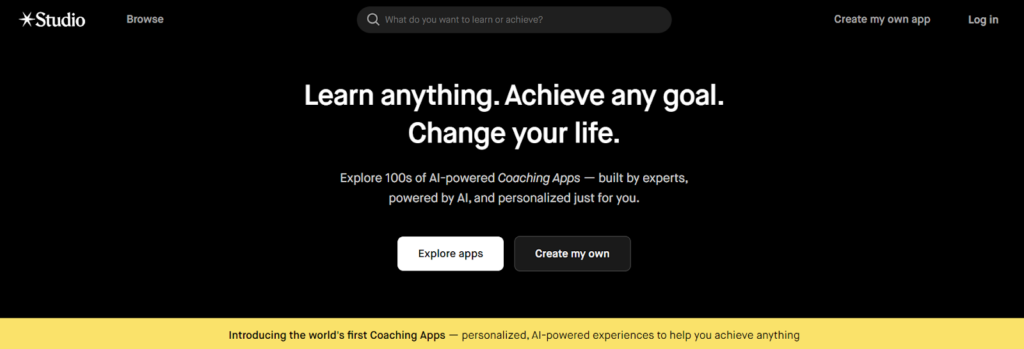
Studio.com provides a focused learning environment for creative skills such as music production, filmmaking, and design.
The platform employs a challenge-based framework where learning is integrated into project development. Instruction comes from active professionals who deliver task-oriented guidance rather than conventional lectures. This approach prioritizes the creation of tangible outcomes.
Key Features
Every Studio.com course is a single, month-long project. You’ll build something real—a song, a short film, a design portfolio—from an empty page to a finished piece.
- Guided by professionals. Your instructor is a working creator who demonstrates techniques and gives direct feedback on your actual work.
- Built-in community. Share progress, get unstuck, and see what others are making in dedicated spaces.
4. Masterclass
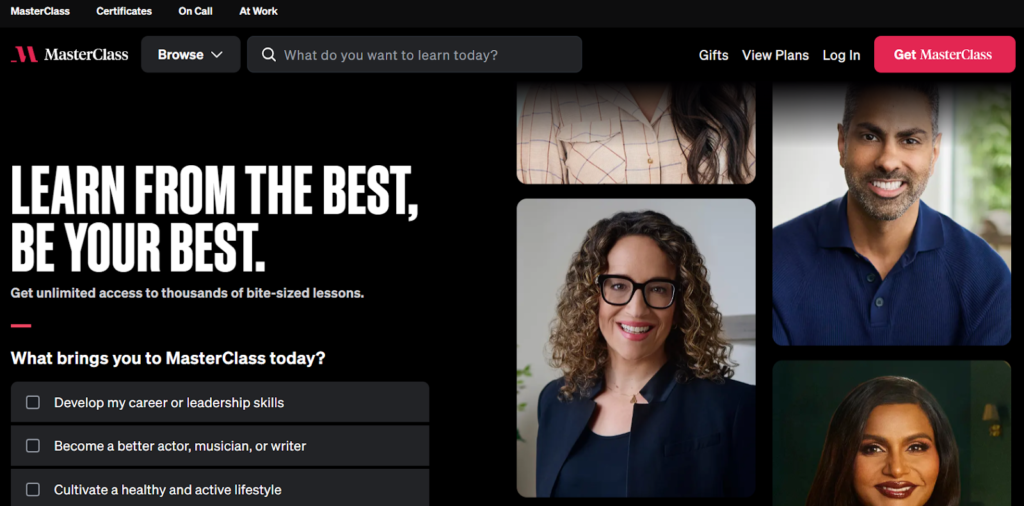
MasterClass is a subscription platform offering video lessons from well-known experts and celebrities. Courses cover many subjects like cooking, business, writing, and sports. The videos are high-quality and designed for self-paced learning. It aims to teach and inspire users across various skill levels.
Key Features
One annual membership gives you full access to every MasterClass course. Lessons come in short videos you can watch on any device.
What you get with each course:
- Bite-sized video lessons.
- Downloadable workbooks and resources.
- Extra materials to review key points.
They’ve added certificate programs recently. These are more structured, created with industry experts, and focus on real job skills and career results.
5. Blinkist
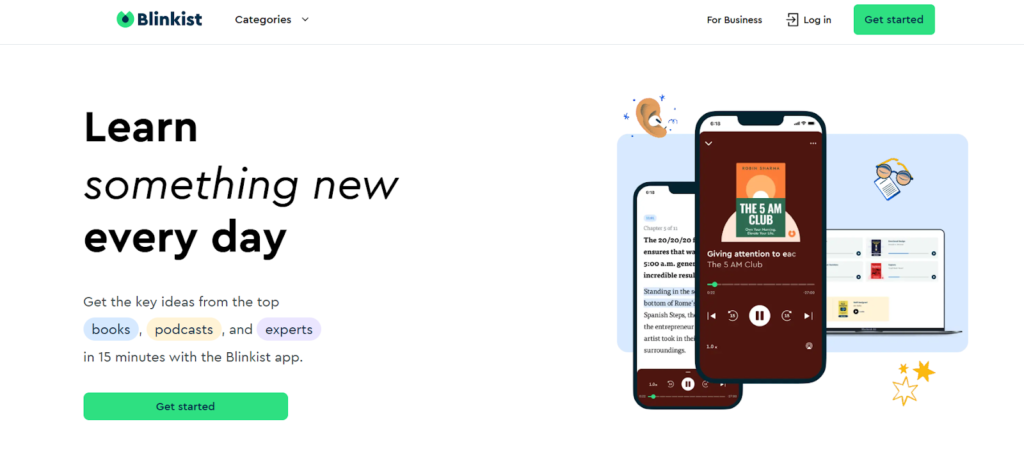
Blinkist is a micro-learning service that provides short summaries of nonfiction books. Its main product, called “Blinks,” condenses key ideas into 15-minute reads or audio clips. Topics include business, psychology, and personal growth. The platform is designed for busy users who want to learn efficiently without reading full books.
Key Features
Blinkist does text summaries and audio versions for everything. Handy when you’re moving around.
- Text or audio — pick whatever fits the moment.
- Shortcasts — short summaries of popular podcasts.
- Book recommendations — based on what you’ve looked at or saved before.
- Works on phone, tablet, computer.
- Multiple languages available.
- Save highlights, share them, discuss key points with others.
Good for getting the main ideas fast without reading whole books.
Conclusion
Choosing an app isn’t about trends—it’s about practicality. It needs to match your available time, how you prefer to learn, and what you want to achieve. Different apps focus on different methods, like daily tasks, projects, or curated content.
Evaluate your needs against what they offer. This increases your chance of consistent use. The app provides structure and support, but the effort is yours.