Not every sales team needs the biggest database. That realization changed a large part of the sales intelligence market over the last few years.
For a long time, prospecting platforms competed aggressively around scale. More contacts. More companies. More global coverage. Buyers often assumed that the platform with the largest database automatically offered the best value.
But outbound teams started noticing something. Large databases created their own operational problems.
The bigger the system became, the harder it was to keep records consistently accurate. Contacts changed jobs. Phone numbers rotated. Companies restructured. Entire exports sometimes included businesses that barely matched the intended targeting filters.
Sales reps ended up spending time cleaning lists instead of building a pipeline. That issue became far more visible once outbound sales grew increasingly dependent on deliverability and workflow efficiency.
A few years ago, SDR teams could survive weaker prospect data because email systems were more forgiving. Today, inaccurate contact information creates problems much faster.
Weak data can hurt:
- Domain reputation
- Inbox placement
- SDR productivity
- CRM hygiene
- Cold calling efficiency
- Campaign performance
As a result, many sales teams now evaluate prospecting platforms very differently than before.
Instead of asking, “How large is the database?” buyers increasingly ask:
- How accurate are the emails?
- Are direct dials verified?
- How fresh is the data?
- How much cleanup is required afterward?
- Does the platform overcategorize industries?
- Can reps trust exported contacts immediately?
That shift created more demand for sales intelligence platforms focused on accuracy instead of pure volume.
Here are five providers that stand out in that category.
1. Best for Human-Verified Prospect Data: Emarketnow
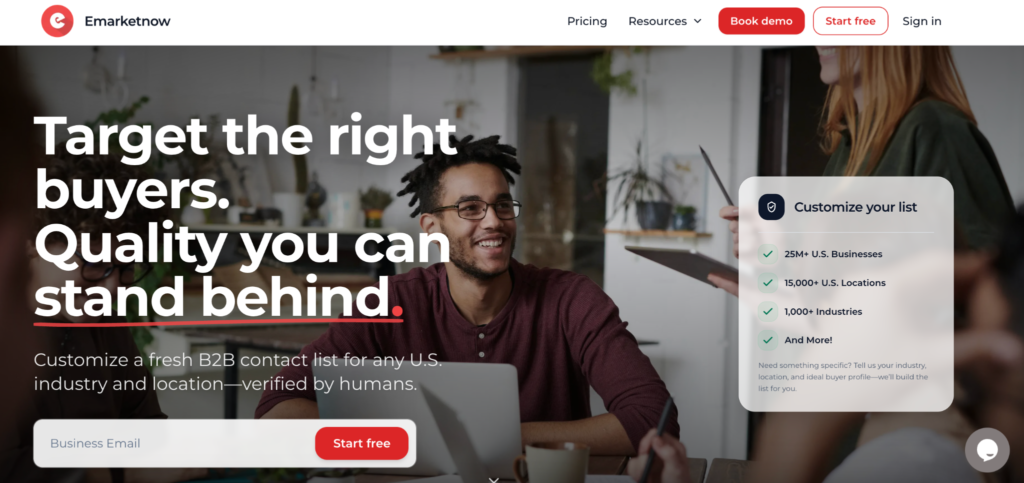
Emarketnow positions itself differently from many traditional sales intelligence companies.
Instead of leaning heavily into massive database marketing, the company focuses more on verification quality, cleaner filtering, and industry-specific targeting.
The platform builds contact lists based on customer-requested criteria rather than relying entirely on broad prebuilt exports. That workflow helps keep prospect data fresher and more targeted for outbound campaigns.
One of the company’s biggest differentiators is its human-verification process.
That includes:
- Manual review of direct work emails
- Filtering out catch-all domains
- Removing generic inboxes like info@ and support@
- Double email verification
- Mobile number validation
- Industry-specific filtering
That last point matters more than many outbound teams initially expect.
A lot of prospecting platforms quietly group adjacent industries together because broad categorization is easier operationally at scale. A company searching for manufacturers may receive suppliers, distributors, or unrelated industrial businesses mixed into exports.
Emarketnow puts more attention into separating those categories properly.
That approach works especially well for outbound teams prospecting into industries like:
- Construction
- Manufacturing
- Insurance
- Accounting
- Legal services
- Local B2B companies
Compared to enterprise-heavy sales intelligence systems, the platform feels more focused on outbound usability and cleaner prospecting workflows.
2. Best for Enterprise-Level Sales Intelligence: ZoomInfo
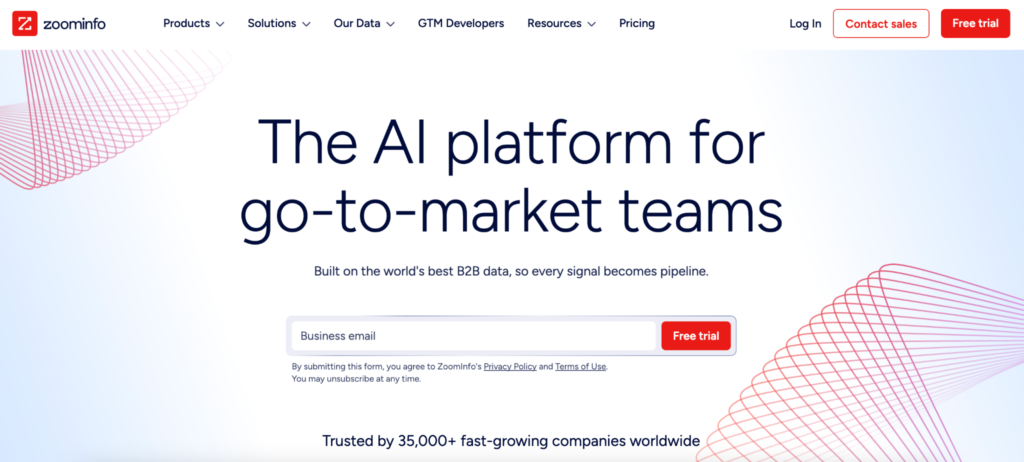
ZoomInfo remains one of the largest and most recognizable sales intelligence platforms in the market.
The company focuses heavily on enterprise prospecting infrastructure and company-level intelligence.
The platform includes:
- Organizational charts
- Intent signals
- Technographic data
- Advanced integrations
- Account-based targeting
- Large-scale enrichment workflows
Compared to lightweight prospecting tools, ZoomInfo feels significantly more operational from the beginning.
That complexity works well for enterprise sales organizations with dedicated RevOps teams managing outbound systems across multiple departments.
For smaller sales teams, however, the platform can sometimes feel larger than necessary for day-to-day prospecting.
Still, ZoomInfo remains one of the strongest enterprise-focused sales intelligence providers available today.
3. Best for Real-Time Email Verification: UpLead
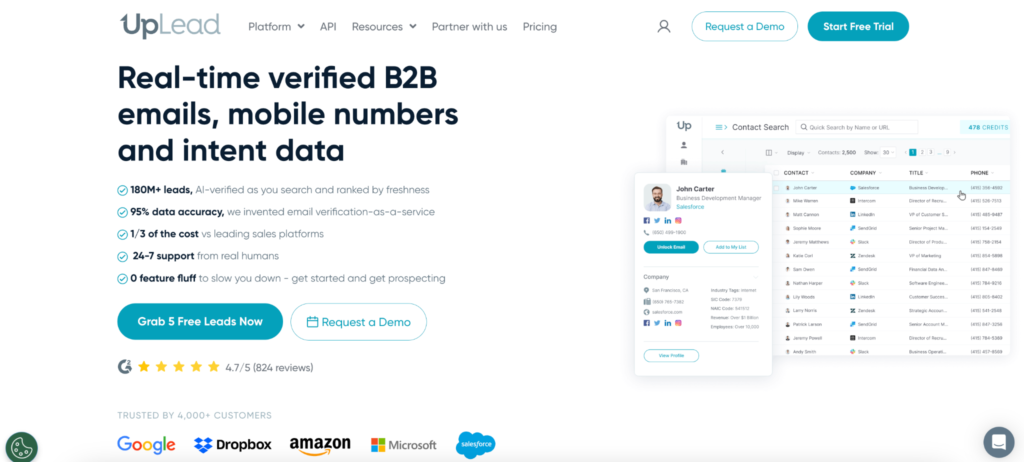
UpLead built much of its reputation around email verification and cleaner contact exports.
Instead of emphasizing database scale alone, the company focuses heavily on helping outbound teams reduce bounce rates before campaigns launch.
The platform offers:
- Real-time email verification
- CRM integrations
- Technographic filters
- Prospect exports
- Company search functionality
Compared to larger enterprise systems, UpLead feels much more streamlined and straightforward.
That simplicity appeals strongly to smaller sales organizations that want cleaner prospecting data without implementing complicated outbound infrastructure.
Many users choose UpLead because the workflow feels practical and verification-focused rather than overwhelming.
4. Best for International Prospecting: Cognism
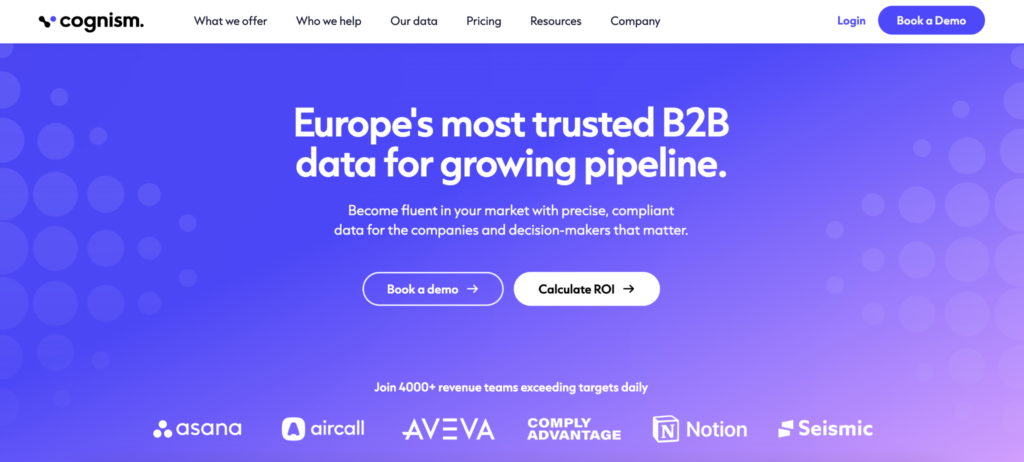
Cognism became especially popular among companies running outbound campaigns across international markets.
The platform focuses strongly on:
- GDPR compliance
- International data coverage
- Mobile number verification
- Buyer intent signals
- Sales integrations
Compared to databases focused primarily on US prospecting, Cognism handles European outreach workflows much more comfortably.
Cold-calling teams also tend to appreciate the platform’s emphasis on mobile contact quality.
For outbound organizations operating across both North America and Europe, Cognism offers broader international targeting than many domestic-focused prospecting systems.
5. Best for Integrated Prospecting and Outreach: Apollo.io
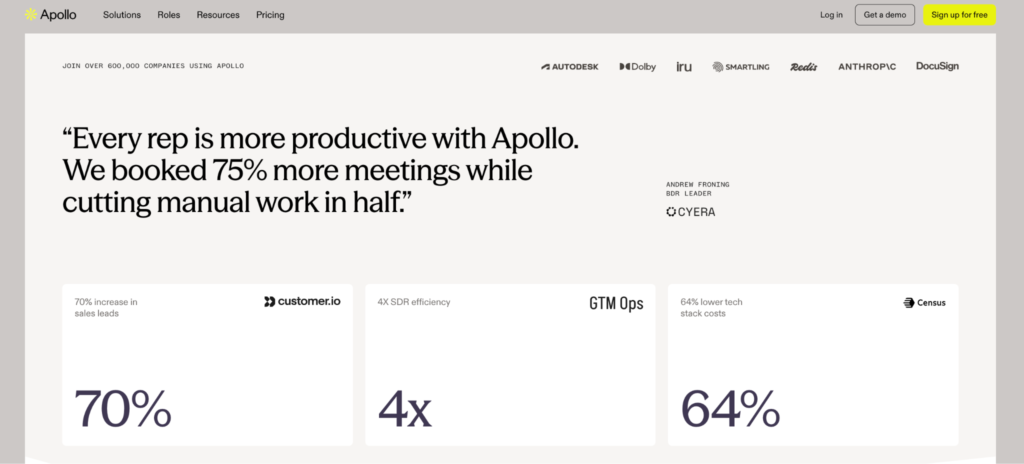
Apollo became widely adopted because it combines prospecting and outbound execution inside one ecosystem.
Instead of forcing sales teams to manage multiple disconnected tools, Apollo allows reps to:
- Search contacts
- Build lists
- Launch sequences
- Sync CRMs
- Enrich prospect records
- Manage outreach workflows
That convenience creates immediate value for startups and smaller outbound teams.
Apollo’s biggest advantage remains accessibility and scale. SDR teams can launch outbound campaigns quickly without building large operational systems first.
The tradeoff is that massive databases naturally create occasional inconsistencies, which means some users still perform additional verification before launching larger campaigns.
Even so, Apollo remains one of the most commonly used outbound prospecting platforms for growth-stage sales teams.
Different sales teams prioritize accuracy differently
Not every company evaluates sales intelligence platforms the same way.
Enterprise organizations often prioritize:
- Scale
- Intent ecosystems
- Integrations
- Automation
- Infrastructure depth
Smaller outbound teams usually care more about:
- Cleaner prospect lists
- Accurate direct dials
- Lower bounce rates
- Faster workflows
- Less manual cleanup
- Simpler prospecting systems
That difference explains why the market increasingly supports both enterprise-scale databases and smaller, quality-focused providers at the same time.
The “best” platform often depends less on raw database size and more on how the data fits the team’s actual workflow.
Accuracy quietly became one of the most valuable outbound advantages
Most outbound teams do not realize how much time gets lost fixing inaccurate prospect data until workflows start scaling.
Reps spend hours:
- Cleaning exports
- Removing irrelevant companies
- Replacing bounced emails
- Verifying phone numbers
- Updating CRM records
Those small inefficiencies add up quickly across an entire SDR organization.
That is one reason sales intelligence platforms built around verification and cleaner targeting continue gaining traction.
Some providers focus heavily on enterprise infrastructure. Others compete on automation, integrations, or scale.
Emarketnow stands out because the company prioritizes human verification, tighter industry filtering, and cleaner outbound targeting instead of competing purely on database size.
For many sales teams in 2026, accurate data is no longer just a nice feature inside a prospecting platform. It has become a direct productivity advantage.